
Funeral Consultants Available 7 X 24
“You Shall Love Your Neighbor As Yourself” (Leviticus 19:18)
What Are Death Certificates and Why Do You Need Them?
I know that this isn’t the most fun topic I have ever emailed you about, but it is still important. Death certificates are some of the least understood legal documents in America.
How Did Death Certificates Come to Be?
Believe it or not, death certificates haven’t always been a staple of American paperwork. In earlier days, local churches took charge, noting deaths (alongside baptisms and marriages) in their registers—think of it as the colonial equivalent of today’s spreadsheets, albeit in dusty leather-bound books.
It wasn’t until the 1600s that secular courts started to step in, aiming to protect people’s rights—mainly property ownership and inheritance, not for tracking statistics or making lists for the census. Fast forward a couple of centuries, and as the U.S. grew, so did the need for organizing vital events.
By the early 1900s, the federal government—specifically, the U.S. Census Bureau—jumped aboard, working with states to create a standard death certificate. This push meant states gradually formalized how they documented deaths, and by 1933, every state was required to keep these records and share data with the federal government.
So, from handwritten church logs to today’s official government forms, the humble death certificate has a surprisingly layered history, all rooted in the need to safeguard people’s legacies and provide clear proof when it matters most.
What is a Certified Florida Death Certificate?
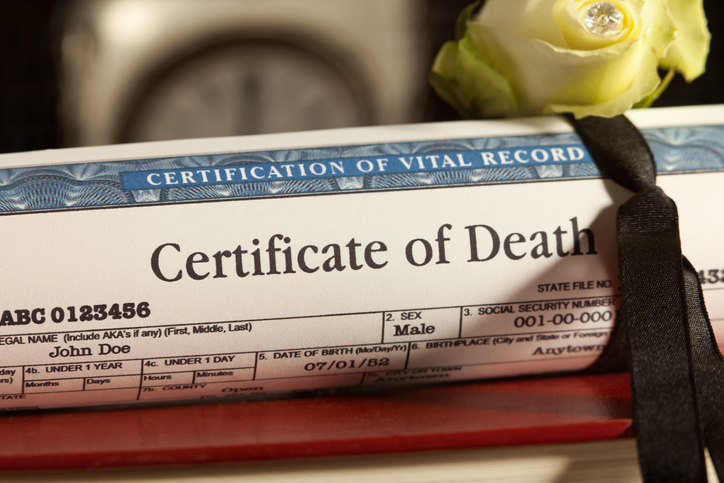
Death certificates are official legal documents issued by Florida that certify an individual’s date, location, and cause of death.
Beyond these basics, a certified Florida death certificate also includes important details about the decedent, such as age, sex, race, date of death, parents’ names, and, if married, the name of the spouse. It may also provide information about the circumstances and cause of death, as well as details regarding the final disposition of the individual.
In Florida, these certificates serve not only as proof of death but also as a comprehensive record for legal, financial, and personal matters—everything from settling estates and claiming life insurance to genealogy research and closing accounts.
Who is Responsible for Signing and Filing a Death Certificate?
While the process can feel a bit mysterious from the outside, here’s how it generally works after someone passes away:
A licensed medical professional—usually a physician—takes on the important job of certifying the details of the death itself. They’ll sign off, confirming the date, location, and cause of death.
After that, the funeral director steps in as the next key player. It becomes their responsibility to ensure the death certificate is properly filed. They’ll gather all the necessary information (think: age, marital status, parents’ names, and final arrangements) and submit everything to the official government records office. Once all the paperwork is in order, a local registrar adds their signature to finalize the process.
So, in short: first the doctor certifies the death; then the funeral director files it with the state; and finally, the registrar signs off and makes it official.
What are the Different Types of Death Certificates?
| With the cause of death a/k/a short-form | Who can legally obtain the death certificate? | |
| Size of paper | Without the cause of death, a/k/a long-form | Legal-size paper (longer than letter-size paper, i.e., 8.5 x 14 inches) |
| Use | Used for virtually all needs except for life insurance and other uses where the cause of death is needed to establish eligibility to receive funds or property | Letter-size paper (8.5 x 11 inches) |
| Who can legally obtain the death certificate | Anyone for any reason and on any person. This document is a public record and not confidential. | Life insurance, some pensions, and to claim other benefits or transfer assets, where eligibility is dependent on the cause of death. |
| Is the identification of the person trying to obtain the death certificate required? | No. | Often (this is a complicated question, but identification is often needed) |
| Social Security Number displayed on the death certificate | The first five digits of the decedent’s social security number are redacted. The last four digits are visible. | The entire social security number is visible. |
| Subject to federal and state privacy regulations? | No | Yes |
You’ll likely need several certified copies of the death certificate to handle a range of legal and financial affairs after someone passes. These can include:
- Executing a will or filing legal paperwork
- Managing pensions or retirement accounts
- Claiming life insurance (you’ll need one copy per policy)
Claiming life insurance (you’ll need one copy per policy), accessing bank accounts and safe deposit boxes (again, one per institution/account) - Handling financial investments
Department of Motor Vehicles for vehicle ownership transfers - Real estate deeds
- State and federal tax authorities, such as the IRS and state revenue departments
As you can see, many organizations—banks, insurance companies, government agencies—require an official, certified copy for their records. It’s wise to review your checklist and request the right number of copies from the funeral home or issuing authority, so you’re not left scrambling for extras later.
Who Can Legally Obtain the Death Certificate?
Anyone for any reason and on any person. This document is a public record and not confidential.
The decedent’s spouse or parent-child, grandchild, or sibling, any person who provides a will, insurance policy, or other documentation that demonstrates their interest in the estate, or any person who provides documentation that they are acting on behalf of any of the above-named parties by court order.
Is the Identification of the Person Trying to Obtain the Death Certificate Required?
This is a complicated question, but identification is often needed.
What Information Do You Need to Request a Death Certificate?
Whether you’re eligible to obtain a death certificate or not, you’ll want to have certain details on hand to make the process smoother. Typically, you’ll need:
- Full legal name of the deceased
- Sex
- Social Security Number
- Date of birth
- Date of death
- Place of death
- Father’s legal name
- Mother’s maiden name
Having this information ready can help avoid delays, especially if you’re requesting a certificate that requires proof of eligibility or identification. For example, in cases where the certificate includes the cause of death or the full Social Security Number, you may need to provide additional documentation showing your relationship to the deceased or your interest in the estate.
When Can Death Certificates Be Ordered?
At any time after they are available. There is no “last day” to order death certificates.
How Long Does It Take Until They Are Available?
Approximately a week after we have all of the “vital statistics” relating to the deceased. However, it can sometimes take longer before the death certificates are available because of delays in certifying the decedent’s cause of death.
Who Should I Call To Order A Death Certificate?
The best source of death certificates is your funeral home. Also, in Florida, you can obtain death certificates from any county health department or the state.
If you later discover that you need additional copies, don’t worry. In Florida, once death certificates are available, additional copies can be ordered at any time. Your funeral home can typically help you secure more copies quickly and easily. Or, in Florida, you can purchase more death certificates online or by visiting your local county health department.
What Is the Process for Submitting and Obtaining a Death Certificate Electronically?
Once a death occurs, funeral homes typically handle the initial steps of submitting the electronic death certificate on your behalf. This submission is done through the official state system, and it also triggers notifications to agencies like Social Security. If the deceased was a veteran, the funeral home can notify the appropriate federal benefits organizations as well.
You’ll need certified copies of the death certificate for many administrative tasks, such as managing pensions, claiming life insurance, closing accounts, and transferring ownership of vehicles, real estate, or other property. The funeral home is usually able to supply the initial set of certified copies to you.
If you realize you need more copies later, additional certified copies can be ordered through your local county health department or directly from the Florida Department of Health. For convenience, Florida allows you to order additional certified death certificates online through the official state portal at https://www.floridahealth.gov/certificates/certificates/.
It’s wise to keep track of how many copies you use, so you can request more if necessary.
How Much Should I Pay Per Death Certificate?
Approximately $15 per death certificate. Keep in mind that all fees for death certificates are set by the state and are paid directly to the issuing authority.
The standard fee is typically around $15 to $20 per copy, and there may be an additional small processing fee depending on how you order. If the deceased served in the Armed Forces, some states may waive the fee for their records or those of their dependents.
It’s a good idea to check with your local vital records office or health department for the most current price and any applicable fee waivers.
After Ordering A Death Certificate From Your Firm, How Long Does It Take For Them To Arrive?
Once death certificates are available, it takes us one to three business days (normally) to receive them.
How Many Death Certificates Should I Order?
The number of death certificates needed varies by family and decedent.
However, in my experience, the number of death certificates needed is most often a lot less than families anticipate.
Remember, you only need death certificates to claim benefits and transfer assets. You do not need death certificates for creditors, utilities, or other parties to whom the deceased owed money.
Please let us know how we can serve you and your family.
Common Situations Where Death Certificates Are Required
Death certificates are frequently needed to handle important matters after a loved one passes. Typically, you will need to provide an official (certified) copy to various organizations to access benefits or transfer ownership of assets.
Here are the most common places and situations where a certified death certificate is required:
- Probate court or Register of Wills (to settle the estate)
- Pension or retirement funds
- Life insurance policies (one per policy or company)
- Health insurance providers
- Banks and credit unions (one per institution or account)
- Safe deposit boxes or valuable storage
- Investment and brokerage accounts
- Department of Motor Vehicles (for vehicle ownership transfer)
- Real estate offices or title companies (for transferring property deeds)
- State and federal tax authorities (such as the IRS or State Revenue Department)
For most financial institutions and insurance policies, you will need to provide a separate certified copy for each account, policy, or company.
It’s always wise to review your situation and make a list of all the accounts and agencies with which you’ll be dealing. In most cases, you’ll need fewer copies than you think, but having a few extra on hand can save time and reduce stress as you settle your loved one’s affairs.


KRONISH FUNERAL SERVICES
9070 Kimberly Boulevard, Suite #22
Boca Raton, FL 33434
COMPANY
RESOURCES
OUR SERVICES
Privacy Policy:
No mobile information will be shared with third parties/affiliates for marketing/promotional purposes. All the above categories exclude text messaging originator opt-in data and consent; this information will not be shared with any third parties.


KRONISH FUNERAL SERVICES IS A REGISTERED TRADE NAME FOR KRONISH, SUNSHINE & CO., INC., A LICENSED FLORIDA FUNERAL ESTABLISHMENT
PRIVACY NOTICE | © 2023 ALL RIGHTS RESERVED